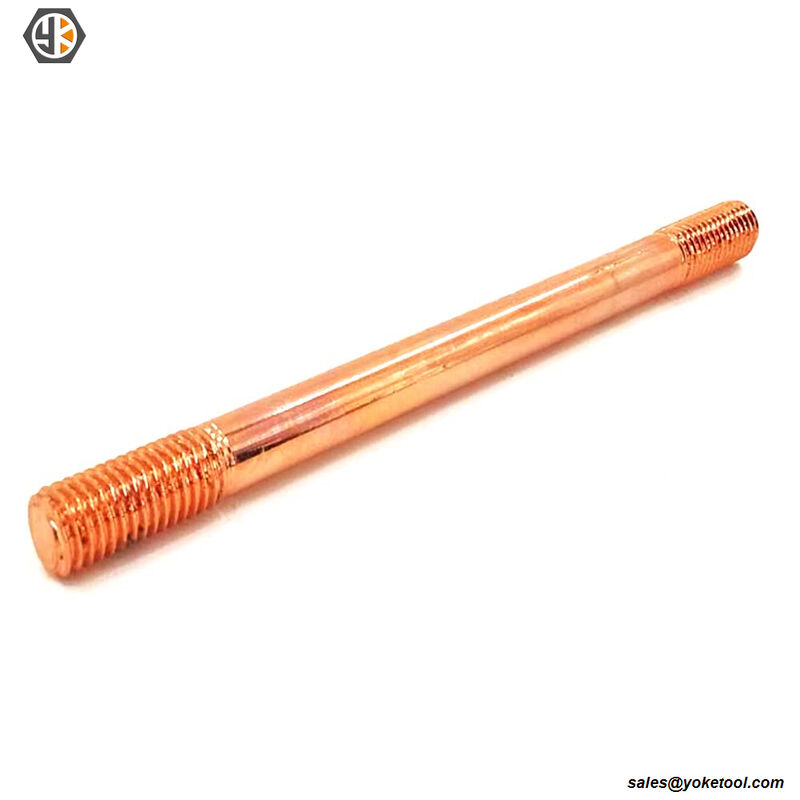
 |
| Place of Origin: | CHINA |
| Brand Name: | Yokelink |
| Minimum Order Quantity: | 500pcs |
|---|---|
| Price: | $0.5~$5.5 |
| Packaging Details: | Carton&Pallet |
| Delivery Time: | 40days |
| Payment Terms: | L/C, T/T |
| Supply Ability: | 100000pcs per month |
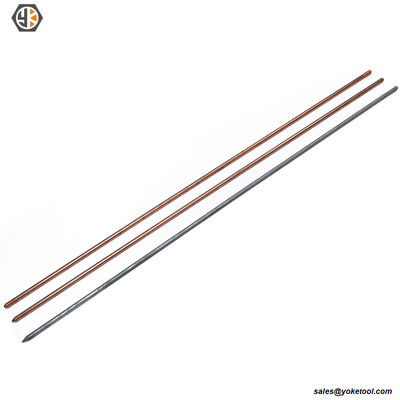
| Product Category: | Earthing & Grounding Systems | Rod Material: | Cold-Drawn Steel With Electrolytic Copper Plating |
|---|---|---|---|
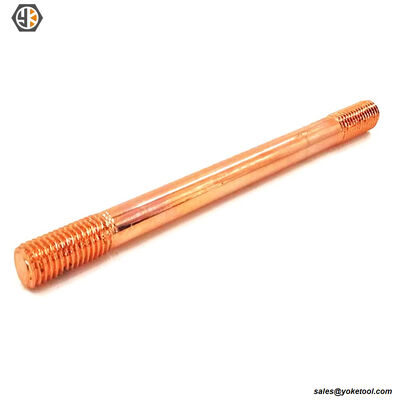
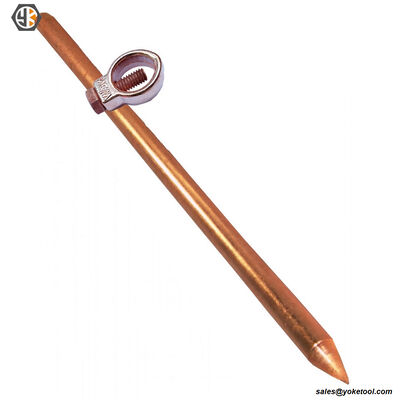
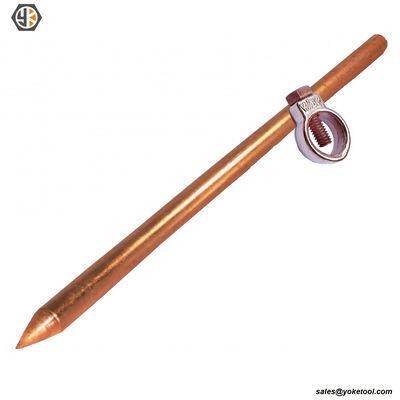
| Copper Thickness: | Minimum 10 Mils (254 Microns) | Design Type: | Pointed / Sectional Threaded |
| Certifications: | UL 467, ANSI/NEMA GR 1 |

| Galvanized | Copper | Diameter | Length | Weight |
| Part No. | Part No. | Inch | Feet | Kg / Pcs |
| E0512-05G | E0512-05C | 1/2 | 5 | 1.30 |
| E0512-06G | E0512-06C | 1/2 | 6 | 1.56 |
| E0558-06G | E0558-06C | 5/8 | 6 | 2.30 |
| E0558-08G | E0558-08C | 5/8 | 8 | 3.20 |
| E0558-10G | E0558-10C | 5/8 | 10 | 3.94 |
| E0534-08G | E0534-08C | 3/4 | 8 | 4.56 |
| E0534-10G | E0534-10C | 3/4 | 10 | 5.70 |
| Copper | Galvanized | HUBBELL | MACLEAN |
| Part No. | Part No. | ||
| E0512-05C | E0512-05G | 8565 | |
| E0512-06C | E0512-06G | 8566 | |
| E0558-06C | E0558-06G | 8576 | |
| E0558-08C | E0558-08G | 8578 | J5328 |
| E0558-10C | E0558-10G | 8580 | |
| E0534-08C | E0534-08G | 8618 | J5338 |
| E0534-10C | E0534-10G | 8620 |
Q1: What is the difference between a copper-bonded and a galvanized ground rod?
A: Copper-bonded ground rods offer vastly superior lifespan and conductivity compared to hot-dip galvanized steel rods. The molecularly bonded copper layer (typically 10 mils thick) will not rust, providing excellent corrosion resistance in acidic or aggressive soils for 30 to 40 years. Galvanized rods are more economical but are generally used for temporary grounding or in less corrosive, non-critical environments.
Q2: What does UL 467 certification mean for ground rods?
A: UL 467 is the Underwriters Laboratories standard for Grounding and Bonding Equipment. For a ground rod to be UL listed, it must pass rigorous physical and electrical tests, ensuring it has adequate tensile strength for driving, proper copper plating thickness (minimum 10 mils for utility use), and an inseparable metallurgical bond between the copper and the steel core to prevent peeling during installation.
Q3: When should I use a "sectional" (threaded) ground rod instead of a pointed one?
A: Sectional ground rods have rolled threads at both ends. They are used when low soil resistivity cannot be achieved near the surface, requiring the rod to be driven deeper into the earth. By using a threaded coupling, multiple sectional rods can be joined end-to-end and driven continuously until the desired depth and resistance level (e.g., less than 25 ohms) are reached.
Q4: How does a rolled thread compare to a cut thread on a sectional ground rod?
A: Yokelink sectional ground rods feature rolled threads rather than cut threads. The thread rolling process displaces the metal without removing it, preserving the continuous copper coating over the threads and maintaining the full structural integrity of the steel core. Cut threads remove the protective copper layer, exposing the steel to immediate underground corrosion.
Q5: How do I connect the grounding wire to the ground rod?
A: The most common and reliable methods are using a bronze Ground Rod Clamp (Acorn Clamp) for a strong mechanical connection, or using an Exothermic Welding (e.g., Cadweld) process. Exothermic welding creates a permanent, molecular, maintenance-free connection between the copper wire and the copper-bonded rod, which is highly recommended for critical utility infrastructure.