Home
Products
About Us
Factory Tour
Quality Control
Contact Us
Request A Quote
Home ProductsPoleline Casting

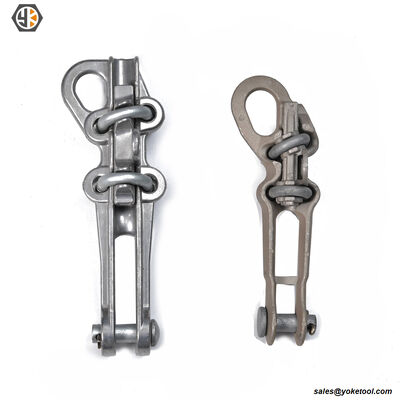
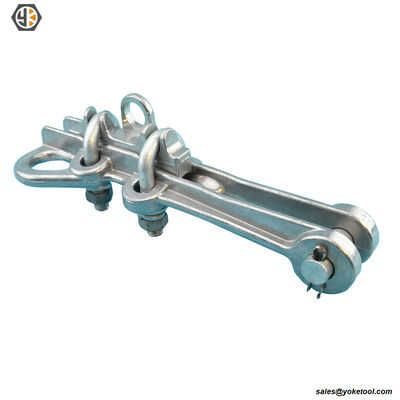
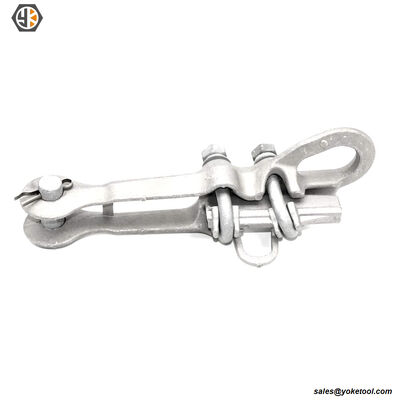
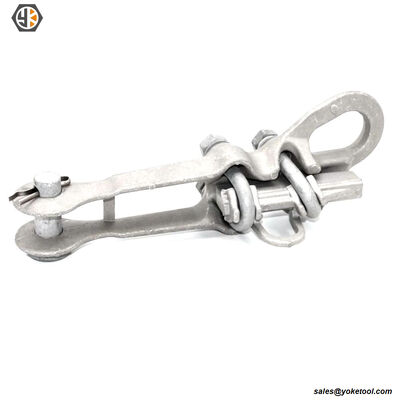
Straight Line Strain Clamp | A356-T6 Aluminum LPDC Casting | Overhead Line Strain Clamp

Straight Line Strain Clamp | A356-T6 Aluminum LPDC Casting | Overhead Line Strain Clamp

    • Straight Line Strain Clamp | A356-T6 Aluminum LPDC Casting | Overhead Line Strain Clamp
    • Straight Line Strain Clamp | A356-T6 Aluminum LPDC Casting | Overhead Line Strain Clamp
    • Straight Line Strain Clamp | A356-T6 Aluminum LPDC Casting | Overhead Line Strain Clamp
    • Straight Line Strain Clamp | A356-T6 Aluminum LPDC Casting | Overhead Line Strain Clamp
    • Straight Line Strain Clamp | A356-T6 Aluminum LPDC Casting | Overhead Line Strain Clamp
  • Straight Line Strain Clamp | A356-T6 Aluminum LPDC Casting | Overhead Line Strain Clamp

    Product Details:

    Place of Origin: CHINA
    Brand Name: Yokelink

    Payment & Shipping Terms:

    Minimum Order Quantity: 1000pcs
    Price: $1.5~$5.5
    Packaging Details: Carton&Pallet
    Payment Terms: L/C, T/T
    Supply Ability: 10000pcs per month
    Contact Now
    Detailed Product Description
    Product Category: Tower Hardware / Strain Clamps Manufacturing Process: Precision Casting + Heat Treatment
    Body Material: High-Strength Cast Aluminum A356-T6 / Ductile Iron Hardware Components: Galvanized Steel U-Bolts And Hex Nuts
    Process: LPDC + CNC Machining

    Straight Line Strain Clamp | Custom LPDC Casting | High-Strength Cast Aluminum | High Precision Machined
     
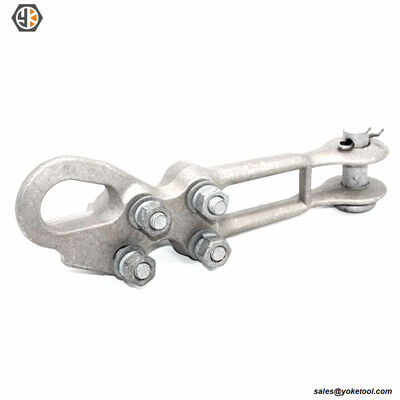
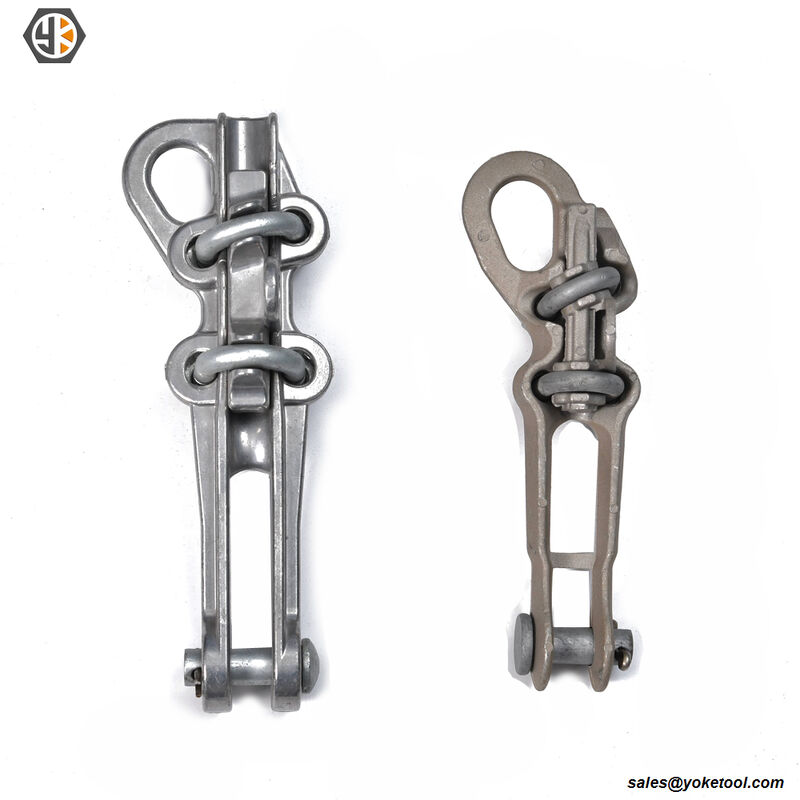
    The Yokelink Straight Line Strain Clamp is designed to deadend bare ACSR, AAC, and AAAC conductors, as well as galvanized steel guy wires. The main body and keeper are precision-cast to provide a high-tension grip without damaging the conductor strands.
     
    Waved Groove Design & High Clamping Force:
    The cast keeper and clamp body feature a specifically engineered waved/contoured groove. When the heavy-duty U-bolts are torqued down, the keeper compresses the conductor into these grooves, creating massive frictional holding power (slip strength) that often exceeds 90% of the conductor's ultimate breaking strength.
     
    Supplied with high-tensile steel U-bolts, nuts, and lock washers. Ductile iron versions are fully Hot Dip Galvanized to ASTM A153, while cast aluminum versions provide natural corrosion resistance with galvanized steel hardware.
    Straight Line Strain Clamp | A356-T6 Aluminum LPDC Casting | Overhead Line Strain ClampStraight Line Strain Clamp | A356-T6 Aluminum LPDC Casting | Overhead Line Strain Clamp


    Our Precision Casting Process

     
    The integrity of a strain clamp is entirely dependent on its casting quality. At Yokelink, we utilize advanced metallurgical processes to eliminate internal defects and guarantee maximum gripping strength.
     
    1. High-Purity Alloy Melting (High-Purity Alloy Melting): We start with premium-grade Aluminum Alloy (for conductors) or Ductile Iron (for ground wires). The alloys are refined in controlled furnaces to eliminate impurities that could weaken the final structure.
     
    2. Dense Gravity & Pressure Casting: Our casting molds are engineered to optimize metal flow and cooling rates. This prevents the formation of internal porosity, shrinkage cavities, or sand inclusions, ensuring the clamp body is solid and structurally uniform.
     
    3. Thermal Treatment & Hardening: After casting, the components undergo a precise heat treatment cycle (T6 for aluminum). This crucial step aligns the internal grain structure, significantly boosting the yield strength and preventing brittle fractures under sudden ice or wind loads.
     
    4. Non-Destructive Testing (NDT): We don't guess on safety. Batches are subjected to X-ray or magnetic particle inspections to verify that the internal casting structure is 100% sound before the clamps are tapped, galvanized, and shipped.
     

    Production Process of Straight Line Strain Clamp

     
    High-quality carbon steel and malleable iron are selected as raw materials and cut into standard blanks, then formed by hot forging or stamping into the main clamp body, pressing plate and fastening parts. After trimming flash, removing burrs and precision machining, internal and external threads are processed for matching assembly. Components undergo heat treatment to improve mechanical strength, toughness and compression resistance. The whole parts are treated with hot-dip galvanizing to achieve outstanding anti-corrosion performance for outdoor use. Finally, strict inspections on dimension, compression performance, surface coating and appearance are conducted, and qualified products are assembled and packaged for delivery.
    Straight Line Strain Clamp | A356-T6 Aluminum LPDC Casting | Overhead Line Strain Clamp
     

    Application of Straight Line Strain Clamp

     
    Straight line strain clamps are critical power fittings widely used in overhead transmission and distribution lines. They are designed to firmly connect and fix aluminum conductors and steel-cored aluminum strands in straight line sections, maintaining stable wire tension and preventing loosening or disconnection. With reliable clamping performance and uniform force distribution, they ensure safe and continuous power transmission. Manufactured with high-strength materials and hot-dip galvanized treatment, they offer great anti-corrosion ability and long service life. They are commonly applied in power grid construction, line renovation and outdoor electrical engineering.
    Straight Line Strain Clamp | A356-T6 Aluminum LPDC Casting | Overhead Line Strain Clamp

    Yokelink Product Quality Inspection Report

     
    We provide comprehensive inspection services for machine bolts, including SGS test bolts and formal Production Part Inspect Report (PPIR). The SGS tests verify the bolts’ compliance with international standards like ASTM A307 and IEEE C135.80, covering mechanical properties and corrosion resistance. The PPIR details all inspection items, ensuring each machine bolt meets dimensional, performance and quality requirements, providing reliable quality assurance for overhead line and industrial applications.
     
    Straight Line Strain Clamp | A356-T6 Aluminum LPDC Casting | Overhead Line Strain Clamp Straight Line Strain Clamp | A356-T6 Aluminum LPDC Casting | Overhead Line Strain Clamp


    Technical Specifications of Straight Line Strain Clamp

     
    Part No. Conductor A B C U Bolt Weight
    Min Max mm mm mm mm Kg / Pcs
    F1148N #6 3/0 245 16 16 M10 0.645
    F1188N #2 556.5 250 16 19 M12 0.750
     
    Straight Line Strain Clamp | A356-T6 Aluminum LPDC Casting | Overhead Line Strain Clamp
     

    Cross Reference (Industry Equivalents):

     
    Conductor Part No. HUBBELL MACLEAN GPP
    Min Max
    #6 3/0 F1148N ADS48N   SAC-48-N
    #2 556.5 F1188N ADS88N   SAC-88-N
    (Note: Manufacturer part numbers are for reference only. Yokelink products are interchangeable based on IEEE C135.90 standards.)
     

    Do you know what is the Casting Process?

     
    In the simplest terms, casting is the "forming of liquid metal."
     
    Its core steps are quite straightforward: Metal (such as iron, steel, aluminum, or copper) is heated in a furnace until it melts, becoming liquid metal. This liquid metal is then poured or pressed into a pre-made mold (cavity) that has the desired product shape. The metal is then allowed to cool and solidify. Finally, the mold is broken or the mold frame is opened to remove the formed part.
     
    Its greatest advantage lies in its ability to manufacture parts with complex internal structures, uneven wall thickness, or large volumes in a single process. This is difficult or extremely costly to achieve with forging (hammering) or machining (CNC cutting).
     
    Straight Line Strain Clamp | A356-T6 Aluminum LPDC Casting | Overhead Line Strain Clamp
     

    What are the main types of casting processes?

     
    Based on the mold materials and pouring methods, the industry classifies casting into four main schools:
    1. Sand Casting
     
    Process Characteristics: The oldest and most commonly used process. A mold is made using specially prepared molding sand (sand mixed with binder), and metal is poured into it. The sand mold is destroyed after the casting is removed (disposable mold).
    Suitable Scenarios: Low cost, suitable for making large, heavy parts ranging from a few kilograms to tens of tons. The surface will be relatively rough.
    Typical Applications: Foundation bases for heavy iron towers, large valve housings.
     
    2. Die Casting
     
    Process Characteristics: Molten liquid metal is rapidly poured into a precision metal mold under high pressure and then cooled under pressure.
    Suitable Scenarios: Extremely high production efficiency, extremely smooth surface, and high dimensional accuracy. Typically used for non-ferrous metals with low melting points, such as aluminum alloys and zinc alloys.
    Typical Applications: Automotive engine housings, communication base station radiators.
    3. Precision Casting / Investment Casting / Lost Wax
     
    Process Characteristics: Also known as the traditional "lost-wax casting" method. A wax model is first made, then coated with refractory slurry. Heating melts the wax, creating a cavity, which is then filled with metal.
    Suitable Scenarios: Extremely high precision, capable of producing very complex parts that do not require further finishing. Commonly used for stainless steel and alloy steel.
    Typical Applications: Aero-engine blades, precision mechanical gears, high-end marine rigging.
     
    4. Gravity Die Casting
     
    Process Characteristics: The mold is made of heat-resistant alloy steel, and molten metal flows into the mold solely by gravity. The mold can be reused thousands of times.
    Suitable Scenarios: Combines the advantages of sand casting and die casting, resulting in a dense internal structure and good mechanical properties in the casting.
    Typical applications: The vast majority of high-strength aluminum alloy electrical fittings (such as bolt-type tension clamps and suspension clamp bodies) are made using this process.


    Product Classification by Casting Process (by Material)

     
    Straight Line Strain Clamp | A356-T6 Aluminum LPDC Casting | Overhead Line Strain Clamp
    Grey Cast Iron: Inexpensive, good shock absorption, but relatively brittle.
     
    Ductile Cast Iron: Contains spheroidizing agents, significantly improving strength and toughness, even comparable to carbon steel. In electrical fittings, load-bearing tension clamps and ball joint arms are almost entirely made of ductile iron.
     
    Cast Steel: Designed for applications requiring extremely high tensile strength and impact resistance, such as hooks for heavy-duty cranes.
     
    Cast Aluminum Alloy: Lightweight, highly conductive, and non-magnetic (does not generate hysteresis loss or heat). Specifically used for clamping overhead bare conductors (ACSR).
     
    Cast Bronze/Brass: Extremely corrosion-resistant and has excellent electrical conductivity. The silicon bronze acorn clamp in a lightning protection grounding system is a classic example.
     
    Straight Line Strain Clamp | A356-T6 Aluminum LPDC Casting | Overhead Line Strain Clamp
     

    Applications of Casting Technology

     
    Casting technology permeates almost every aspect of modern industry, primarily focusing on the following major categories:
     
    Power & Utility Infrastructure: From various clamps and insulator feet on transmission towers to explosion-proof junction boxes in underground power grids, castings are ubiquitous.
     
    Automotive: Approximately 20% of a car's weight is composed of castings, including engine blocks, gearbox housings, brake discs, and wheel hubs.
     
    Heavy Machinery: Excavator tracks, bucket gears, and crusher wear-resistant liners all require extremely hard castings for impact and wear resistance.
     
    Pumps & Valves: Whether it's urban water supply networks or petrochemical pipelines, valve bodies, flanges, and pump housings are almost entirely made using sand casting.
     
    Straight Line Strain Clamp | A356-T6 Aluminum LPDC Casting | Overhead Line Strain Clamp
     
    Frequently Asked Questions (FAQ)
     
    Q1: Why is casting quality so critical for a Straight Line Strain Clamp?
    A: The clamp is the single point of failure at a deadend pole. If the casting process leaves internal porosity (air pockets) or sand inclusions inside the metal, the body will have hidden weak points. Under the dynamic tension of wind or ice loads, these defects can cause a catastrophic brittle fracture. Yokelink's strict casting and NDT inspection processes guarantee a solid, flawless internal structure.
     
    Q2: Should I choose a Cast Aluminum or Ductile Iron strain clamp?
    A: It depends on the cable you are securing. For bare aluminum conductors (ACSR, AAC), you must use Cast Aluminum Alloy clamps to avoid galvanic corrosion and magnetic heating losses (hysteresis). For securing galvanized steel guy wires or static ground wires, Ductile Iron clamps (Hot Dip Galvanized) are preferred for their sheer mechanical strength.
     
    Q3: How do you prevent internal defects like porosity in your casting process?
    A: Internal porosity (tiny air pockets) is the enemy of tensile strength. We eliminate this risk through a highly controlled Gravity Die Casting and precision Sand Casting process. We strictly regulate the pouring temperature and use advanced gating systems in our molds to ensure smooth, turbulent-free metal flow. Furthermore, critical load-bearing batches are subjected to Non-Destructive Testing (NDT), such as X-ray or ultrasonic inspection, to guarantee a 100% solid internal structure before the parts ever reach the field.
     
    Q4: Why do cast aluminum strain clamps undergo "T6 Heat Treatment"?
    A: Raw cast aluminum has decent strength, but it isn't strong enough for the extreme tension of deadend applications. The T6 Heat Treatment involves solution heat-treating the cast clamp at a high temperature, quenching it, and then artificially aging it. This metallurgical process fundamentally alters the grain structure, dramatically increasing the yield strength and hardness of the aluminum alloy, ensuring the clamp will not stretch or deform under massive conductor tension.
     
    Q5: Why does the utility industry prefer Ductile Iron over Malleable Iron for structural castings?
    A: Safety and mechanical reliability are the primary reasons. While both are cast irons, Ductile Iron (Nodular Iron) contains spherical graphite structures, giving it a much higher tensile strength and elongation (flexibility) that rivals carbon steel. It can absorb sudden shock loads—like heavy wind or ice dropping from a line—without shattering. Malleable iron is more brittle and prone to catastrophic failure under sudden impact, which is unacceptable for critical overhead poleline hardware.
     

    Value-Added Supply Chain Services

     
    1. Blanket Order & Free WarehousingStraight Line Strain Clamp | A356-T6 Aluminum LPDC Casting | Overhead Line Strain Clamp

    Yokelink offers Blanket Order programs: Place an annual order to lock prices, we manufacture your total volume and hold stock in our facility free of charge. Split Shipments: Schedule partial shipments (e.g., monthly or quarterly) based on your project progress. You get the benefits of just-in-time delivery without the risk of shortages.

    2. DDP Shipping (USA Duties Included)Landed Cost Certainty:
     
    We handle the complex logistics. Our DDP (Delivered Duty Paid) service covers sea freight, US Customs clearance, and Section 301 tariffs. The price we quote is the final price delivered to your door / Warehouse.

    3. Free Sample Program
     
    We offer Free Samples to qualified commercial buyers for testing and approval.
     
    4. Empowering Latin America's Utility Infrastructure
     
    We have established a robust supply chain and a proven track record across Brazil, Mexico, El Salvador, Honduras, Nicaragua, Ecuador, Bolivia, Chile, Peru, Uruguay, Guatemala, Argentina, and the Dominican Republic. From standard distribution lines to complex 34.5 kV double-circuit transmission projects, leading utility contractors trust Yokelink for uncompromising quality and on-time delivery.
     
    Straight Line Strain Clamp | A356-T6 Aluminum LPDC Casting | Overhead Line Strain Clamp

    Contact Details
    Ningbo Yokelink Machinery Co.,Limited

    Contact Person: Mr. Tony

    Tel: 86-574-86882908

    Send your inquiry directly to us (0 / 3000)

    Other Products